French Braid: How to make it Autumn’s biggest hairstyle trend
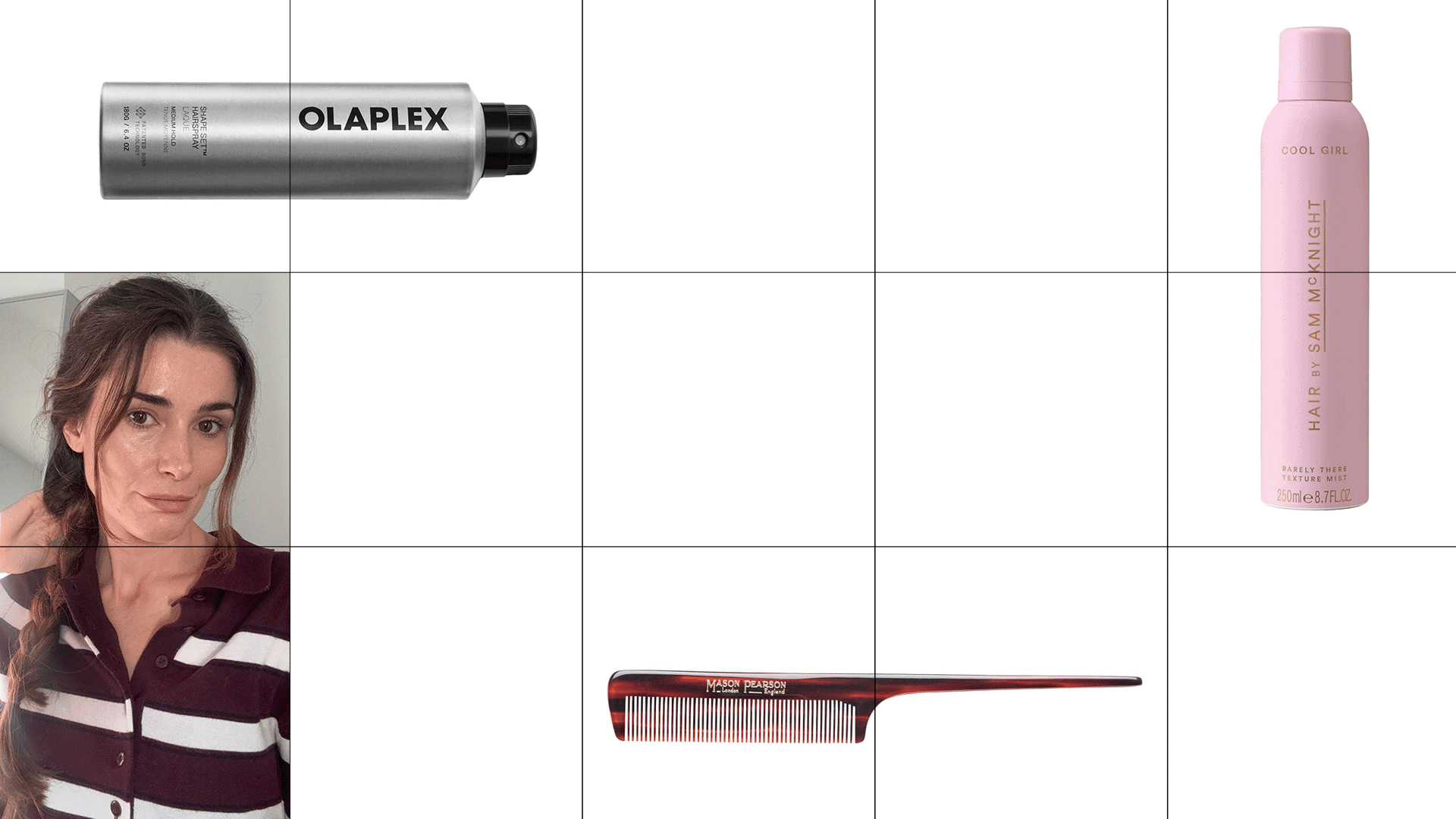
The world of beauty is constantly evolving, but some styles possess a timeless quality that refuses to fade. Right now, the French braid is making a significant comeback, moving from high fashion runways to everyday reality, cementing its place as a defining trend for the upcoming autumn season. From movie premieres to red carpet events, stars like Zendaya and Gigi Hadid have embraced this elegant technique, proving that classic hairstyles are anything but old-fashioned.
But this beautiful braid is more than just a fleeting trend; it carries a rich history that stretches back millennia. While we associate the French braid with European fashion, its true origins are much further afield. The earliest depictions of braiding techniques date back to ancient North Africa, where stone paintings reveal that braiding was used by people to signify age, social rank, identity, and marital status. It was only later, during the 19th century, that the technique was popularized within Western media, giving it the sophisticated flair we recognize today.
Understanding the technique involves a simple yet clever distinction. The French braid is characterized by its smooth, elegant look, where the plaits cross over the middle section, sitting close to the head. This differs markedly from the Dutch braid, where the sections move under the middle strand, resulting in a more voluminous, outwardly sitting braid.
Despite the classical look, mastering the French braid might seem complicated, but the actual process is surprisingly accessible. If you can manage a basic plait, adding a French braid is just a simple, elegant modification. The key to achieving a polished result lies in preparation and technique.
Achieving the Perfect French Braid
To ensure your braid holds beautifully and looks its best, start with the right hair preparation. It is highly recommended to perform the style on second-day hair, especially if you have straight or slippery hair, as this helps the hair gain the necessary grip. You can use a texturizing spray to create better hold, or incorporate a curling wand to introduce volume and texture, which enhances the final effect.
Next, begin the braiding process by sectioning your hair into three equal parts across the top of your head. Then, initiate the braid by swapping the left section with the middle one, followed by crossing the right section over the middle. This sets the foundation for the French braid’s characteristic crossover pattern.
As you continue, the secret to a beautiful French braid is gradually adding hair to each section as you work. With each crossover, move the hair over the middle strand. Continue this motion, adding hair as you move down to the nape of your neck, until you have incorporated all the length. Securing the finished braid with a hair tie is the final step.
For that effortless, undone finish that many love, you can gently pull out some face-framing layers and tendrils to soften the lines. To add volume and definition, gently teasing sections can help. Finally, a light mist of hairspray can secure the style, but adding a hair serum or hair oil to the ends provides a touch of shine. For a wonderfully messy look, mist with a texturizing spray, or use a curl cream to define any loose waves you’ve pulled out. With a little practice, you’ll find that this ancient technique is an incredibly simple way to achieve a stunning, sophisticated hairstyle.
Buy on Amazon
Credit
